Khakassia: Flora and Fauna
A Chapter Revealing How Abundant and Rich Is Wildlife in Khakassia
Previously we've highlighted Khakassia's stunning nature, and now we delve into the nature's world of this remarkable Siberian region.

Diverse Plant Cover
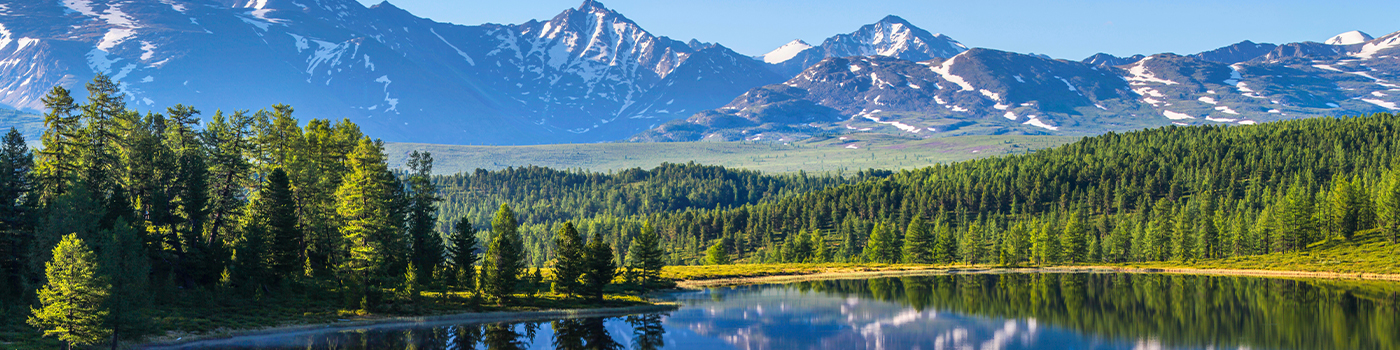
The climate and geographical features of the republic create favorable conditions for the exceptional botanical variety. Khakassia hosts over 1,500 plant species, including numerous endemics. Here you can find both steppe and meadow plants, as well as high-mountain and taiga areas.
Mountain forests, a home to conifers such as larch, spruce, and cedar, fir, pine, make up the most of the region's woodland expanses. Steppe and forest-steppe areas are typical for birch and less frequent for aspen and poplar. Steppe herbs are abundant with sedge, feather grass, cheegrass, plants of the Poaceae family, while meadow vegetation boasts mixed herb-grass, including fescue, clover, geranium meadow, and others. In high-mountain tundra, mosses and lichens prevail, with swamp areas teemed with reed, bulrush, sedge.
About 300 medicinal botanicals thrive across Khakassia such as milfoil, St. John's wort, wormwood, hemp nettle, great burnet and more.

The Rarest and Most Beloved
Khakassia holds well-known red-listed herbs, featuring common heather, Altai bellflower, Lady's slipper, and adonis vernalis. Representing both the republic and its capital stands the Asian globeflower, or locally called "little fires," featured in the Rare and Endangered Plants of Siberia Red Book. From a distance, these stunning orange or yellow blossoms resemble a vivid little flame, beloved not only for its striking beauty, but for renowned healing properties.
One more significant plant of Khakassia is wild iris. At first look, this cluster of long, tough leaves seems quite plain, but bursting into bloom in early summer, it blankets the steppes and meadows in purple.
Thyme, known as "irben" in Khakassia, is a precious plant, frequently used in herbal teas and medicine practices. Other local herbal blends are rich with rhododendron, oregano, bergenia, willow herb, rosehip and melissa. The region is also famous for its wild-harvested foods used in nutrition – pine nuts and a variety of berries, such as lingonberries, bilberries, honeysuckle, and currants.

Fauna of Khakassia
The region boasts diverse and unique wildlife. It is a home to 75 species of mammals. Brown bears, giant moose, maral deer, forest reindeer, lynx, wolverines, and wolves are found here. You can also meet sables, beavers, chipmunks, foxes, squirrels, and hedgehogs. River valleys host hares and minks, while high-mountain meadows are inhabited by voles, moles, shrews, and dwarf hamsters. Rare region's animals encompass snow leopards, argali sheep, Siberian forest reindeer, Siberian ibex, and Eurasian otters.
About 40 fish species thrive in Khakassia's lakes and rivers, teeming with Siberian sturgeon, lenok, sterlet, taimen, grayling, and trout. The region counts 337 species of birds, such as the common quail, daurian partridge, common stonechat. By water bodies appear the short-eared owl, demoiselle crane, mallard, and northern pintail. Steppe areas are inhabited by lapwings, yellow wagtails, Pallas's sandgrouse, and chesnut-eared buntings. Among the predatory ones in the republic live the black kite, hawk, saker falcon.
The Fragile Balance of a Vast Land
Khakassia's rich flora and fauna make it a standout region for tourists and ecologists. Preserving these natural gems and ensuring the sustainable future for all species are essential goals to keep the ecosystem in balance and foster regional growth.
We hope you enjoyed discovering Khakassia with the article. May it spark your curiosity as this Siberian pearl is a place you have to see for yourself!